
Popular Destinations & Must-See Attractions
Cappadocia is one of Türkiye’s most visited travel destinations, famous for its unique landscapes, fairy chimneys, underground cities, and rich history. Every year, millions of travelers from around the world visit Cappadocia to explore its natural wonders and cultural heritage.
Göreme Open Air Museum
The Göreme Open Air Museum is the most important historical site in Cappadocia and a UNESCO World Heritage Site.
It features rock-cut churches, monasteries, and well-preserved frescoes dating back to the early Christian era.
Göreme Open-Air Museum is an open-air museum located in the Cappadocia region of Nevşehir, Turkey, renowned for its unique rock-cut monastic complexes. It was inscribed on the UNESCO World Heritage List in 1985 and represents one of the best-preserved examples of Byzantine religious architecture.
Key Information
- Location: Göreme, Nevşehir, Turkey
- UNESCO Status: World Heritage Site (1985)
- Period of Origin: 10th–12th centuries
- Highlights: Tokalı Church, Dark Church (Karanlık), Elmalı Church, Saint Barbara Church
History
The volcanic landscape of Cappadocia created soft tuff rock that was easy to carve, enabling the formation of rock-cut structures. From the 4th century onward, monastic communities retreated to the region and established monasteries, with Göreme emerging as a major center of religious life. The churches built during the Byzantine era are adorned with remarkable frescoes that vividly reflect the theological narratives of the period.
Why it’s popular:
- UNESCO World Heritage status
- Ancient rock-cut churches
- Central location in Cappadocia
Uchisar Castle
Uchisar Castle is the highest point in Cappadocia and offers a breathtaking 360-degree panoramic view of the region. It is one of the best spots for sunrise and sunset photography.
Uchisar Castle is a natural rock fortress located at the highest point of the Cappadocia region in Nevşehir, Turkey. Carved into a massive volcanic tuff formation, the castle is both a remarkable geological formation and a historic defensive stronghold, making it one of the most iconic landmarks of Cappadocia. It lies within the boundaries of Göreme National Park, which is listed as a UNESCO World Heritage Site, and is famous for its 360-degree panoramic views.
Key Information
- Location: Uçhisar Village, Nevşehir, Turkey
- Elevation: Approximately 1,350 m above sea level
- Historical Use: Multi-layered occupation from the Hittite period through the Byzantine era
- Entrance Fee (2025): Approximately 320 TRY (Museum Pass not valid)
- Visiting Hours: 09:00–21:00 (may vary by season)
Geological and Architectural Features
Uchisar Castle is formed from a giant rock pillar created millions of years ago by volcanic tuff deposits from Mount Erciyes and Mount Hasan, shaped over time by wind and water erosion. Through human excavation, it was transformed into a multi-level living and defensive complex. Inside the castle, visitors can find rooms, tunnels, cisterns, and pigeon houses, many of which were used for defense, shelter, storage, and agricultural purposes.
Highlights:
- Highest viewpoint in Cappadocia
- Spectacular panoramic scenery
- Ideal for sunset photos
Paşabağları (Monks Valley)
Paşabağları is home to Cappadocia’s most iconic three-headed fairy chimneys. It is one of the most photographed and recognizable landscapes in the region.
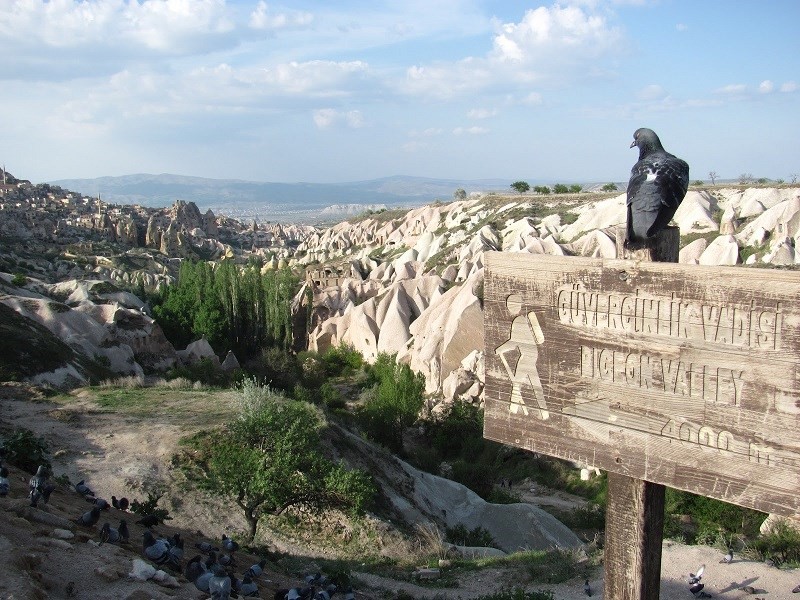
Devrent Valley—also known as Imagination Valley—is a natural geological valley located between Avanos and Ürgüp in the Cappadocia region of Nevşehir, Turkey. Unlike many other valleys in Cappadocia, Devrent has no human settlements or rock-cut churches. It is famous for its fairy chimneys that resemble animals, objects, and human figures, offering one of the region’s most imaginative visual experiences.
Key Information
- Location: Avanos–Ürgüp road, Cappadocia, Nevşehir
- Alternative Names: Imagination Valley, Dream Valley, Pink Valley
- Iconic Formation: The camel-shaped fairy chimney
- Access: Approximately a 10-minute drive from the Göreme National Park entrance
- Best Time to Visit: Year-round; best light conditions are early morning and at sunset
Geological Features
Devrent Valley is characterized by volcanic tuff formations shaped by millions of years of erosion. Continuous wind and water abrasion has created natural “sculptures” that resemble camels, seals, snakes, birds, and human silhouettes. Because of these striking forms, the valley is often compared to an open-air sculpture museum, inviting visitors to use their imagination while exploring the landscape.
Why you should visit:
- Iconic fairy chimneys
- Easy walking paths
- Unique natural formations
Devrent Valley
Also known as Imagination Valley, Devrent Valley is famous for rock formations resembling animals and human figures, such as camels, snakes, and birds
Devrent Valley—also known as Imagination Valley—is a natural geological valley located between Avanos and Ürgüp in the Cappadocia region of Nevşehir, Turkey. Unlike many other valleys in Cappadocia, Devrent has no human settlements or rock-cut churches. It is famous for its fairy chimneys that resemble animals, objects, and human figures, offering one of the region’s most imaginative visual experiences.
Key Information
- Location: Avanos–Ürgüp road, Cappadocia, Nevşehir
- Alternative Names: Imagination Valley, Dream Valley, Pink Valley
- Iconic Formation: The camel-shaped fairy chimney
- Access: Approximately a 10-minute drive from the Göreme National Park entrance
- Best Time to Visit: Year-round; best light conditions are early morning and at sunset
Geological Features
Devrent Valley is characterized by volcanic tuff formations shaped by millions of years of erosion. Continuous wind and water abrasion has created natural “sculptures” that resemble camels, seals, snakes, birds, and human silhouettes. Because of these striking forms, the valley is often compared to an open-air sculpture museum, inviting visitors to use their imagination while exploring the landscape.
Why it’s unique:
- Creative rock shapes
- Short and easy visit
- Fun for families and photographers
Avanos & Pottery Workshops
Located along the Kızılırmak River, Avanos is known for its centuries-old pottery tradition. Visitors can watch live demonstrations or try pottery making themselves.
Avanos is a historic pottery town in the Cappadocia region of Nevşehir, Turkey. Situated along the banks of the Kızılırmak River, Avanos is famous for its red clay, carried by the river and used for centuries as the primary material for ceramic production. This tradition dates back to the Hittite era and has made Avanos one of Anatolia’s most important centers of traditional handicrafts.
Key Information
- Location: 18 km north of Nevşehir, on the banks of the Kızılırmak River
- Population: Approximately 12,000
- Historical Name: Venessa (Roman period)
- Famous For: Handmade pottery made from Kızılırmak red clay
- Climate: Hot and dry summers; cold and rainy winters
History and Cultural Heritage
The history of Avanos dates back to the Bronze Age and is mentioned in Assyrian and Hittite tablets under the name Zu-Winasa. During the Roman period, known as Venessa, it was the third most important city of the Cappadocian Kingdom. Avanos continued to develop through the Byzantine and Seljuk periods. Notable examples of its rich heritage include the 13th-century Alaaddin Mosque and the Seljuk-era Sarıhan Caravanserai, both reflecting the town’s long-standing cultural and architectural legacy.
Top reasons to visit:
- Traditional pottery workshops
- Cultural experience
- Local shopping opportunities
Derinkuyu Underground City
The Derinkuyu Underground City is one of the largest and deepest underground cities in Cappadocia. It once sheltered thousands of people and includes ventilation shafts, kitchens, storage rooms, and churches.
Derinkuyu Underground City is a multi-level underground settlement located in the Cappadocia region of Nevşehir, Turkey. Carved into soft volcanic tuff rock, the city was used in antiquity as a shelter and defensive refuge. Today, it is recognized as one of the deepest and best-preserved underground cities in the region and is included within the UNESCO World Heritage Site designation of Cappadocia and Göreme National Park.
Key Information
- Location: Derinkuyu, Nevşehir, Turkey
- Depth: Approximately 85 meters
- Open Levels: 8 (estimated up to 18 in total)
- Estimated Capacity: Up to 20,000 people
- UNESCO Coverage: Cappadocia and Göreme National Park (1985)
History and Discovery
The origins of Derinkuyu date back to the 8th century BC, during the Phrygian period. It was later expanded in the Byzantine era and used by Christian communities as protection against Arab raids. The city was rediscovered by chance in 1963, when a local resident uncovered hidden passages during renovations to his home.
Why it’s popular:
- Multi-level underground structure
- Incredible ancient engineering
- Fascinating guided experience
Kaymaklı Underground City
Kaymaklı is another highly visited underground city, known for its wide tunnels and interconnected living areas.
Kaymaklı Underground City is a multi-level underground settlement located in the Cappadocia region of Nevşehir, Turkey. Carved into soft volcanic tuff rock, it is one of the largest and best-preserved underground cities in the region. Today, it is an important tourist attraction and is included in the UNESCO World Heritage Site designation together with Göreme National Park and the Cappadocia area.
Key Information
- Location: Kaymaklı Village, Nevşehir, Turkey
- Construction Period: Estimated 8th century BC
- Number of Levels: 8 (only the first 4 levels are open to visitors)
- Estimated Capacity: Approximately 3,500 people
- UNESCO Status: Inscribed in 1985 as part of Göreme National Park and Cappadocia
History
The earliest levels of Kaymaklı Underground City are believed to have been carved during the Phrygian period (8th–7th century BC). The city was later expanded during the Roman and Byzantine eras and used as a refuge by Christian communities. It also served defensive purposes during Arab raids and regional conflicts, functioning as a secure shelter for the local population.
Love Valley
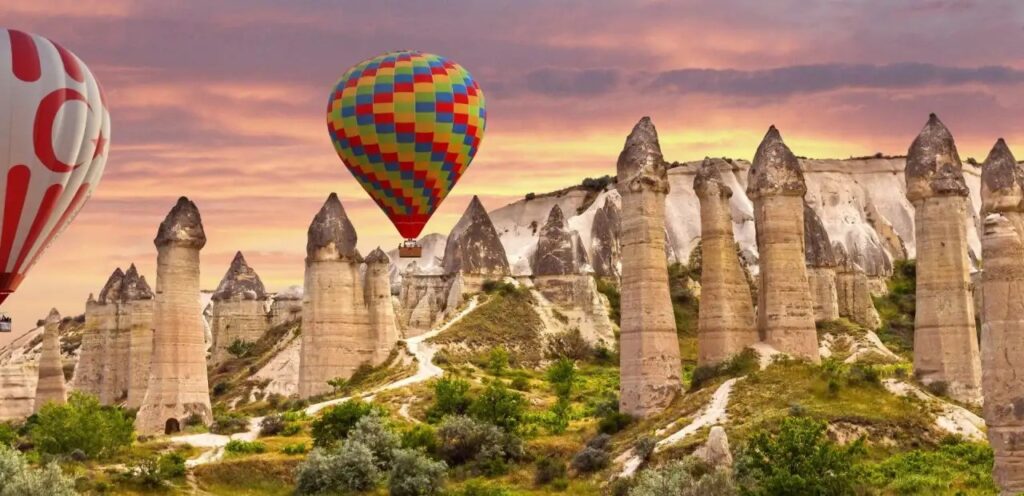
Love Valley is famous for its unusual fairy chimneys and scenic walking trails. It’s a favorite stop for photography and nature lovers.
Love Valley—known in Turkish as Aşk Vadisi—is a famous valley near Göreme in the Cappadocia region of Nevşehir, Turkey. It is best known for its wind- and erosion-shaped fairy chimneys with distinctive phallic forms and is considered one of Cappadocia’s most photogenic hiking routes. The valley is especially popular at sunrise and sunset, when hot air balloons often fill the sky.
Key Facts
- Location: Between Göreme and Çavuşin, Nevşehir, Turkey
- Highlights: Unusually shaped fairy chimneys and a scenic walking trail through the valley
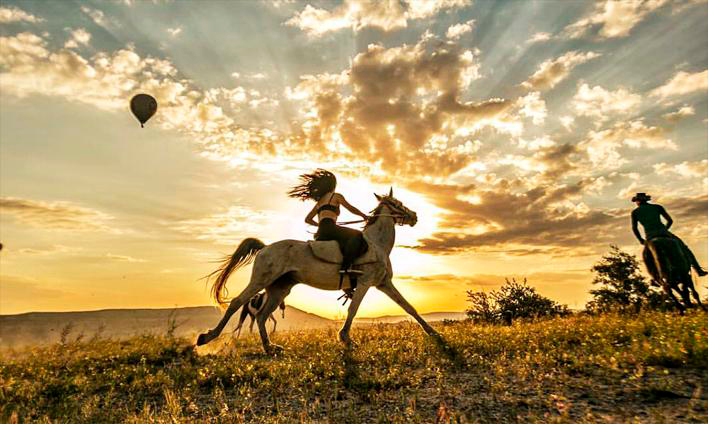
- Activities: Trekking, photography, ATV and horseback riding tours, camping
- Best Time to Visit: Spring and autumn; sunrise and sunset hours
- Nearby Attractions: Göreme Open-Air Museum, Uchisar Castle
Formation and Geology
The fairy chimneys in Love Valley were formed by the erosion of volcanic tuff layers deposited millions of years ago by volcanic eruptions. Rain and wind gradually wore away the softer rock, while harder capstones protected the columns beneath, creating tall, “capped” pillars. The valley’s striking, phallic-shaped silhouettes are the reason behind its name “Love Valley” and have made it especially popular on social media and among photographers.
Red Valley
Red Valley is one of the best sunset spots in Cappadocia, offering stunning red and pink tones as the sun sets behind the rock formations.
Red Valley—known in Turkish as Kızıl Vadi—is a famous valley located between Göreme and Çavuşin in the Cappadocia region of Nevşehir, Turkey. The valley takes its name from the tuff rocks that glow in deep red hues at sunset, offering one of Cappadocia’s most striking landscapes. The Red Valley Sunset viewpoint is especially popular among photographers and nature lovers.
Key Information
- Location: Göreme, Nevşehir, Turkey
- Known For: Red-colored rock formations at sunset
- Nearest Area: Göreme National Park
- Popular Activities: Sunset viewing, hiking, photography
Geography and Formation
Red Valley is a natural formation shaped by millions of years of erosion acting on volcanic tuff layers. The valley’s stratified rock formations shift in color—from pink to orange to deep red—depending on the angle of sunlight. The area also features fairy chimneys, rock-cut churches, and tunnels, some of which date back to the Byzantine period, adding historical depth to its dramatic natural scenery.
Why Is Cappadocia So Popular?
- Unique fairy chimney landscapes
- Combination of history and nature
- Underground cities and cave churches
- Sunrise & sunset viewpoints
- World-famous hot air balloon flights